Nattynooks
Hands resting over black cotton no-show socks by a sunlit window

Most socks are plastic.These aren't.

One less daily toxin source for your body to handle and for you to think about

100% Premium Cotton Contact. Every material tested and certified clean.

Minimalist line art illustration of bare feet representing 500,000 pores across both feet as direct entry points into the body.
Your Feet
  • Half million pores between them
  • Among the highest pore density on your body
  • Pores are direct entry points into your body
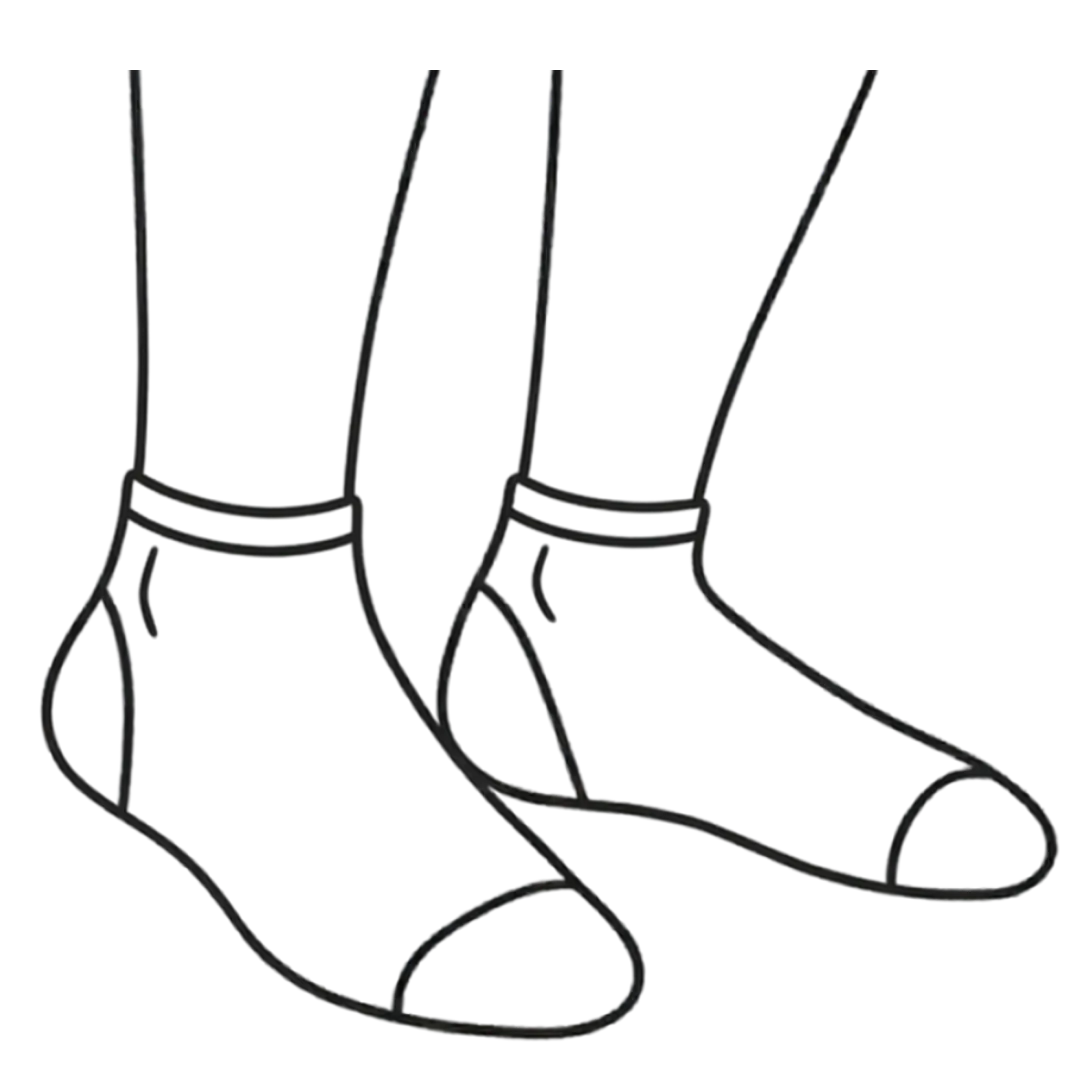
Line art illustration of feet wearing socks representing synthetic plastic fibers pressing against skin pores daily.
Your Socks
  • Almost all are synthetic, plastic fibers
  • Plastic is petroleum-based
  • Leaches toxins into every pore, every day

Why does this matter?

Synthetic fibers shed microplastics with every step.

Those tiny plastic particles can pass through your skin and have been found in human organs and the brain.

Regular cotton isn't automatically clean either.

It's grown with pesticides and weed killers like glyphosate. These farming chemicals include endocrine disruptors that interfere with your hormones. And repeated exposure adds up over months and years.

And you don't feel any of it happening.

There's no obvious warning sign. It builds in the background, 
a little at a time, while everything feels normal.

Two hands holding petroleum based synthetic plastic pellets compared to clean, non-toxic natural raw cotton fibers.

Which one do you want your body absorbing?

Fewer toxins in your body = an easier, better life

Potential benefits associated with reducing chemical exposure. Not guarantees.


More inthe tank

More mental and physical energy available for the things you actually want to do.

A clearer head

An easier time staying focused, finding your words, and keeping your train of thought when the day gets busy.

Morepatience

Better rest, steadier moods, and more patience left when the day runs long.

LONG TERM EFFECTS

Glyphosate, formaldehyde, and PFAs, found in standard synthetics, are known carcinogens. Less exposure means lower odds of the diseases they're linked to. Daily chemical buildup is also one of the drivers of how fast your body ages. Cutting it back plays a part in a more resilient immune system.

Every outcome above traces back to published research, almost all of it from the past few years. You're seeing it before it's mainstream.  SEE THE STUDIES

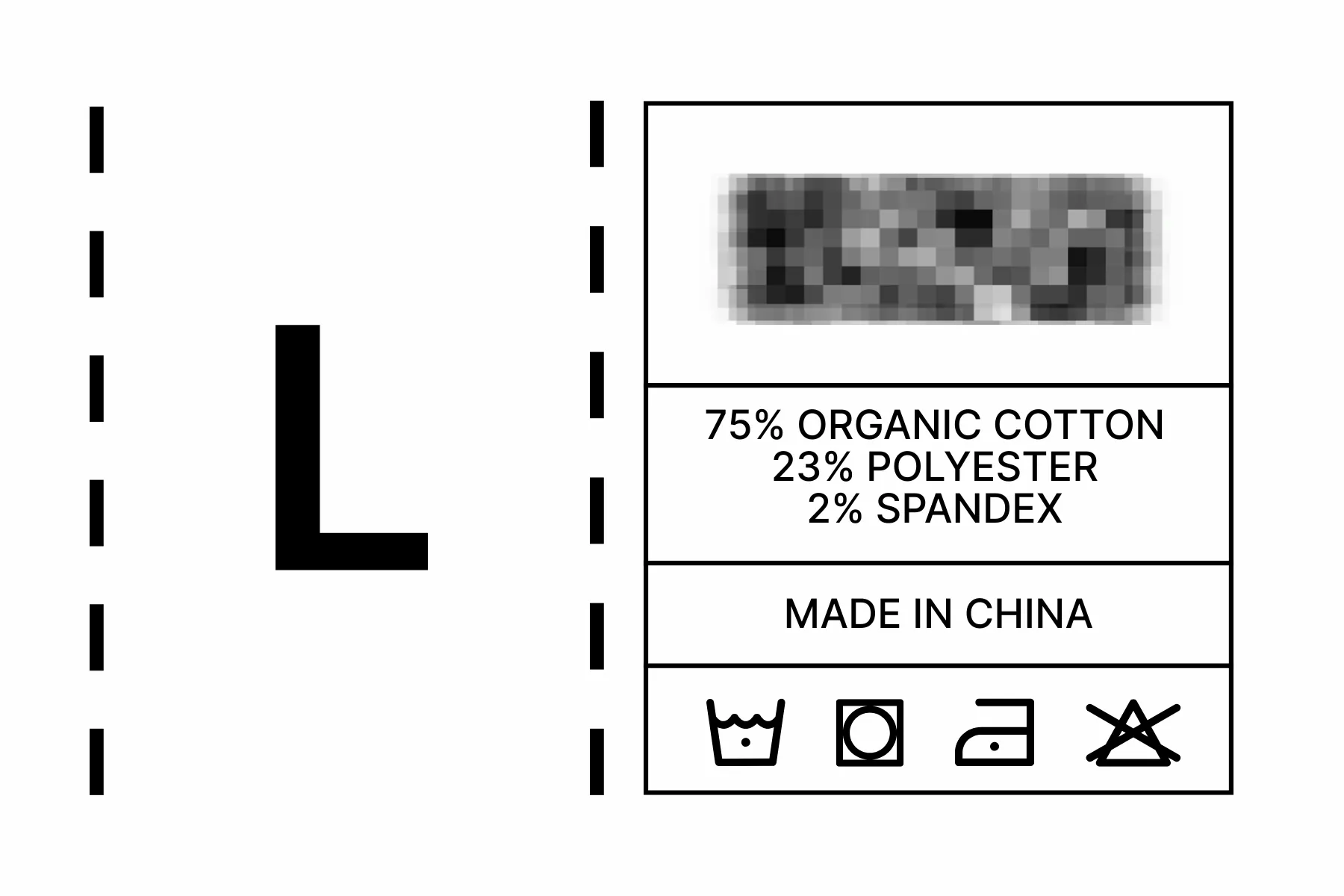
Standard organic cotton sock label showing a blend of 75% organic cotton, 23% polyester, and 2% spandex.

Your average "organic" sock. Not ours.

"Organic" on the label. Synthetics against your skin.

Without certification, there's no minimum amount of organic material required. The sock could be mostly plastic and still carry the word "organic." Even certified organic socks are still allowed up to 25% synthetic material. Buried in the fine print.

Every health swap counts.This one gets missed...
It shouldn't.

You’ve already made health changes that matter. This one doesn’t ask much from you. Once the cleaner pair is in your drawer, the better choice is already there when you get dressed.

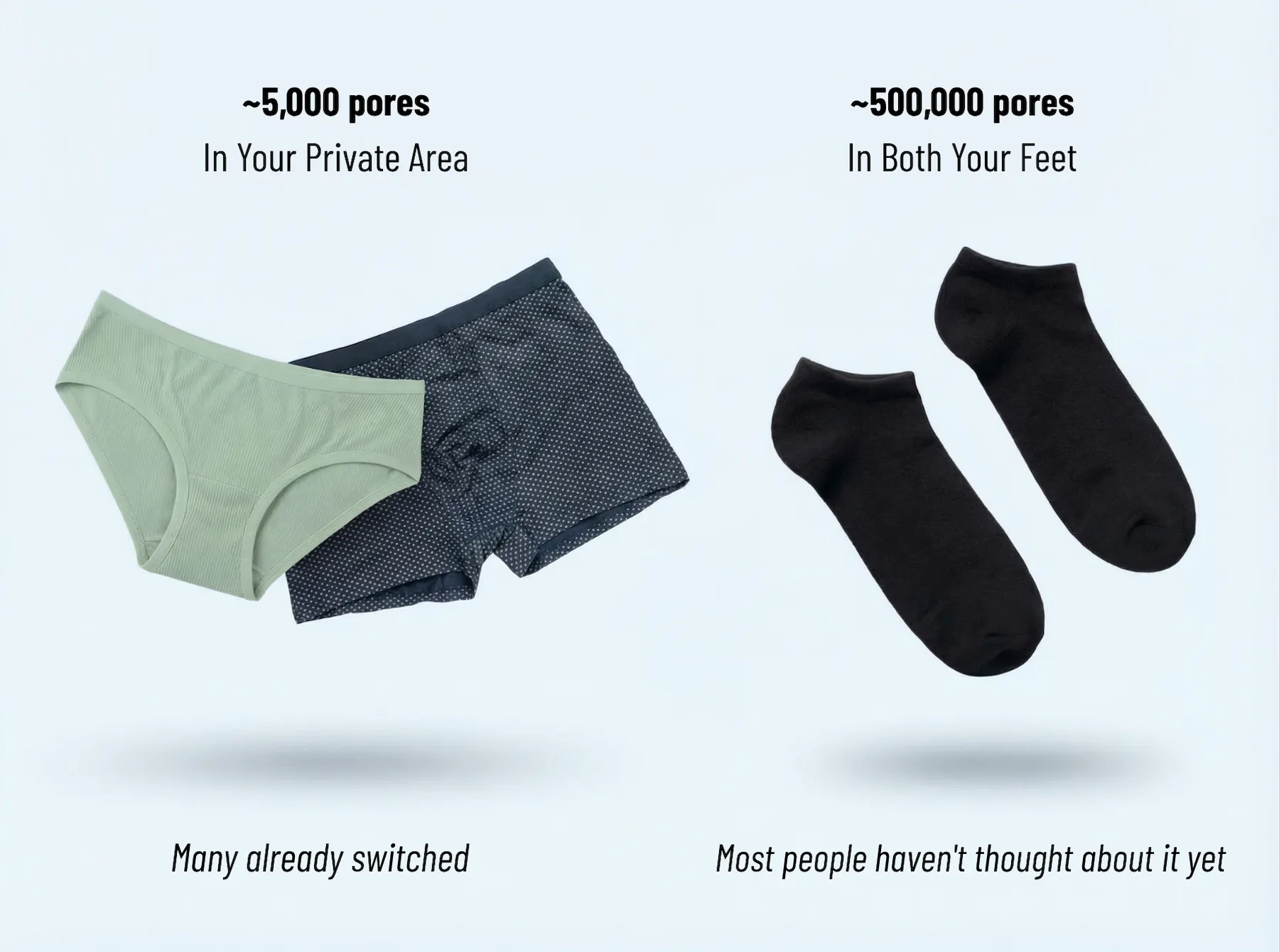
Visual comparison of cotton underwear and black Nattynooks cotton socks highlighting the difference between 5,000 sweat pores in your private area versus 500,000 pores in your feet.
The Process

Oeko-Tex Standard 100 Explained

How the material gets cleaned and certified

  • 1
    Raw fiber

    Synthetic fiber arrives carrying manufacturing residue. Glyphosate, BPA, pesticides, phthalates, formaldehyde, azo dyes, heavy metals, and more.

  • 2
    Extraction

    That residue is extracted before production. Heat, pressure, and hot water washing draw it out of the fiber.

  • 3
    Lab testing

    What remains is sent to an independent lab and tested against 1,000+ known harmful substances.

  • 4
    Certified or rejected

    Only fibers that clear every test receive Oeko-Tex Standard 100 certification.

Nothing hidden.Every fiber, every certification.

97%
Cotton
2%
Elastane
1%
Polyamide

(Click to expand each)

Our 3% Synthetics Never Touch Your Skin. Here's How:

  • 1
    Cleaned

    The tiny 3% goes through the same cleaning process above. The stretch stays. The chemicals don't.

  • 2
    Covered

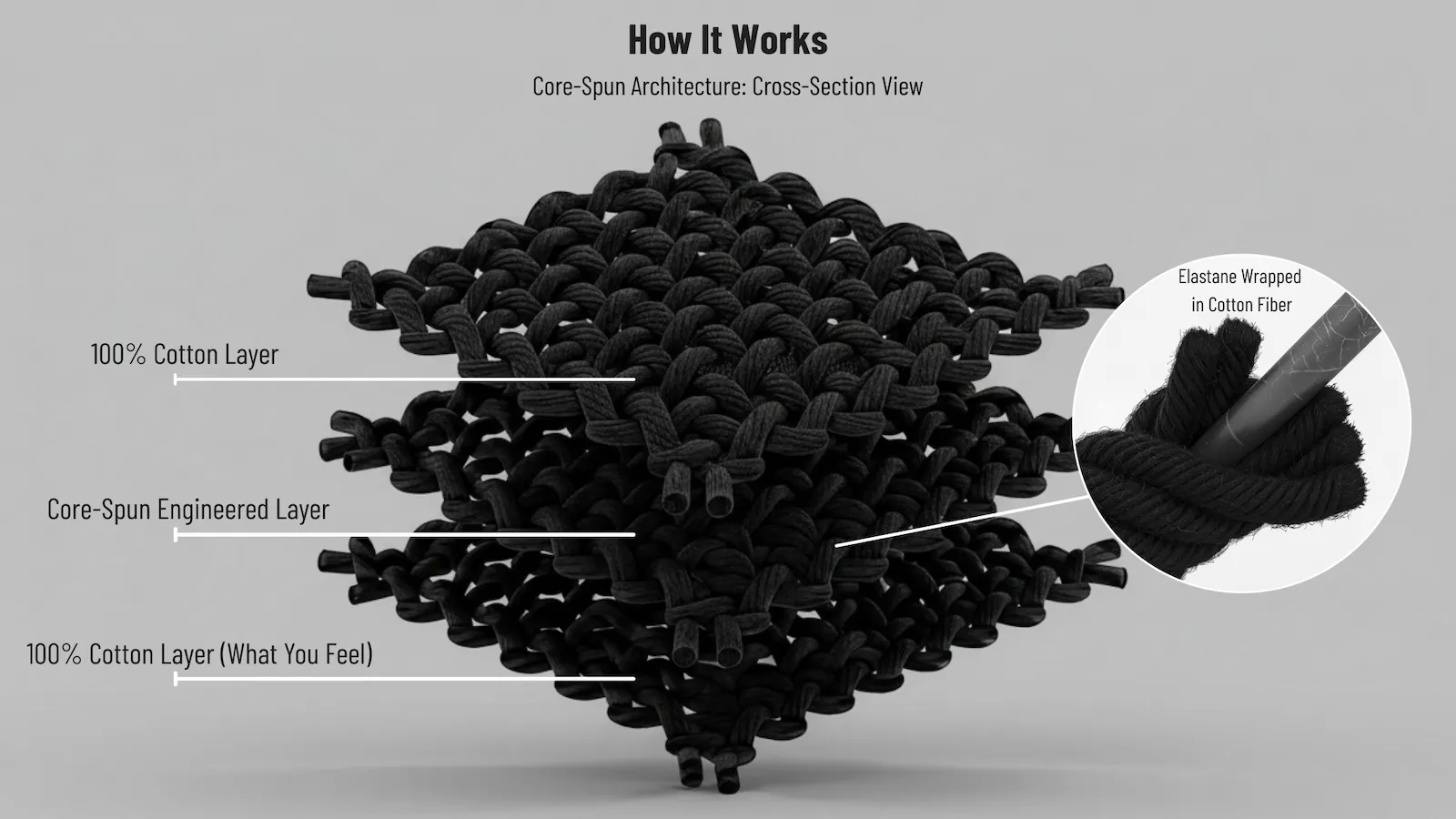
    Certified clean cotton wraps fully around it at the yarn level. A complete barrier between the fiber and your skin.

Either way —3% is effectively nothing. But even at that percentage, it's already been stripped of everything that shouldn't be there.

Three layer diagram of non-toxic corespun sock construction with a 100 percent clean cotton skin contact layer wrapping core elastane.

Stretch on the inside. Cotton against your skin.

REAL FEEDBACK

From the People Who Wore Them First

Wear tester survey response choosing Nattynooks over standard socks to avoid polyester chemicals.
Wear tester survey response noting zero foot odor after wearing the socks for several days in work shoes.
Text message review stating the socks did not cause skin irritation or rashes like typical polyester and nylon blends.
Wear tester survey response confirming Nattynooks stayed up during a run without sliding down the ankle.
Text message review stating feet were noticeably less sweaty and dried out faster with Nattynooks.
Wear tester survey response praising the superior softness and all day comfort of Nattynooks socks with 100 percent cotton skin contact.
Clean materials.
A sock you’ll actually want to wear.
Built for people who pay attention
Upgrade Your Socks